
TLDR:
- Instagram’s organic reach rate has dropped to 3.50% on average and keeps declining year over year. Posting more frequently into that shrinking window does not reverse the trend.
- 65% of marketing leaders say they want a direct connection between social media activity and business goals. Most businesses cannot show one.
- 9 out of 10 decision-makers say they are more receptive to businesses that consistently produce high-quality, insight-driven content. Volume is not the same thing as quality.
- 60% of B2B buyers say strong thought leadership content makes them willing to pay a premium to work with that firm. The post count on your profile page is not in that equation.
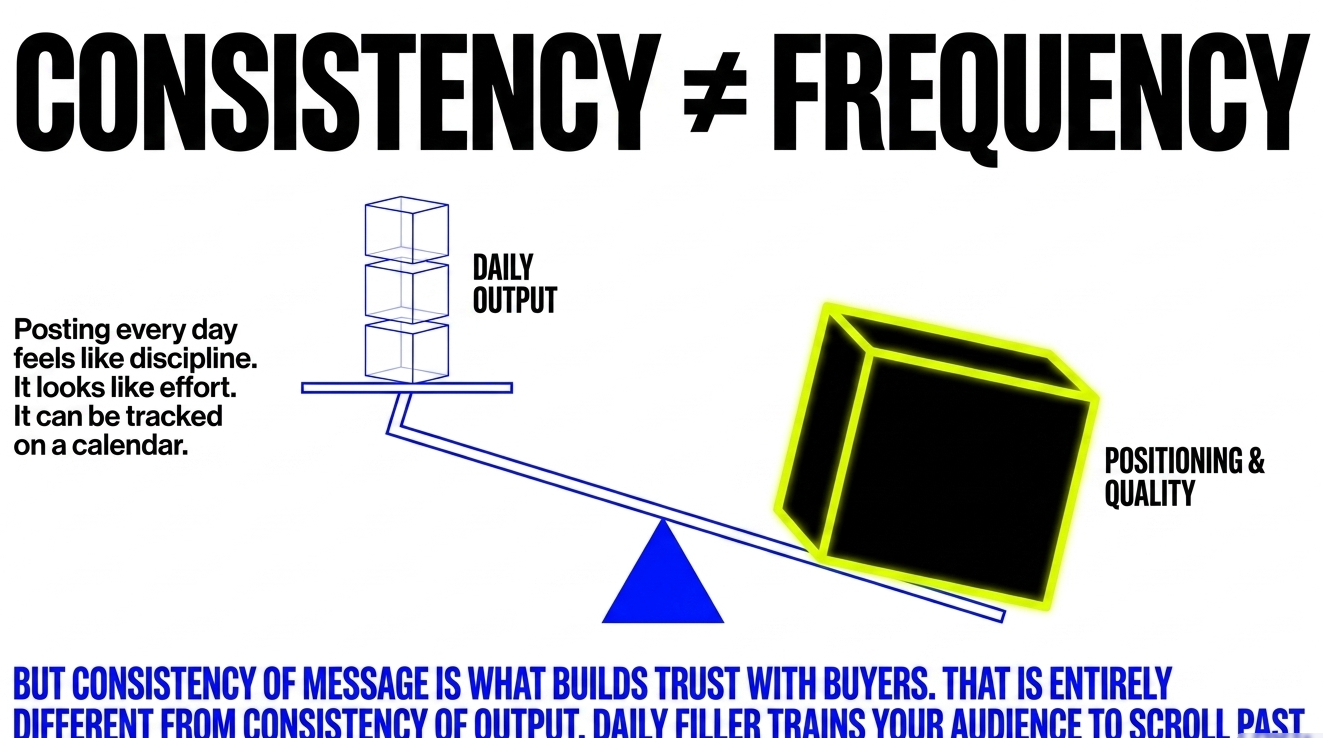
Somewhere along the way, consistency got confused with frequency. Posting every day feels like discipline. It looks like effort. It can be tracked on a calendar, reported to a client, and presented as proof of work. What it rarely does is generate leads, build authority, or connect social activity to revenue in any measurable way.
The agencies that sold this idea were not dishonest about everything. Consistency does matter. But consistency of message, quality, and positioning is what builds trust with buyers. That is a different thing entirely from consistency of output. A business can post every day for six months and have nothing to show for it except an archive and a burnt-out marketing coordinator.
The platforms did not help. Every major social network has a financial incentive to tell businesses they need to post more. More content means more inventory to monetize. It does not mean more results for the person publishing.
What a Social Media Strategy Actually Is (And Why Frequency Is Not a Substitute for One)
A social media strategy is a documented plan that connects content decisions to business outcomes. It starts with a specific audience, a specific message, and a defined action that the content is intended to prompt. Every post should be traceable to one of those three things. If it cannot be, it is filler.
Most businesses do not have a strategy. They have a content calendar. These are not the same. A content calendar tells you when to post. A strategy tells you what to say, to whom, why it matters, and what you want that person to do next. Without the second, the first is just a schedule of activities that have no clear purpose.
The social media marketing gap at the 500K to 2M revenue level is almost never a posting frequency problem. It is a positioning and messaging problem. The business cannot clearly articulate why its ideal buyer should follow them, trust them, or act on what they share. Posting three times a day does not fix that. It just amplifies the confusion.
Why Organic Social Media Reach Has Changed the Math on Volume
Instagram’s average organic reach rate is 3.50%, and it fell another 12% year over year. Facebook averages 1.20%. These numbers mean that for most business accounts, a given post reaches a small fraction of the people who already follow them, let alone anyone new. The platforms have built their revenue model around paid distribution. Organic posts are increasingly what fills the space between ads.
This is not a complaint. It is a constraint worth understanding before anyone decides that posting every day is the answer. If you are reaching 3% of your audience per post, adding more posts does not automatically compound that reach in a useful way. What it does is dilute the attention you could be giving to fewer, sharper pieces of content.
Lower posting frequency with higher quality content is consistently producing better engagement results than volume-based approaches. That is not an opinion from a copywriter who prefers less work. It is what the data shows when researchers analyze millions of posts across platforms. The algorithms are built around signals like saves, shares, and meaningful engagement because those behaviors indicate the content was worth someone’s time. Daily filler does not produce those signals. It trains your audience to scroll past.
What Social Media Engagement Actually Measures and Why the Wrong Metrics Are Winning
Likes are not leads. Impressions are not inquiries. This distinction sounds obvious until a business owner shows up to a quarterly review with charts about reach and follower growth and asks why revenue has not moved. The metrics that feel good to report and the metrics that connect to business outcomes are different categories, and most reporting conflates them.
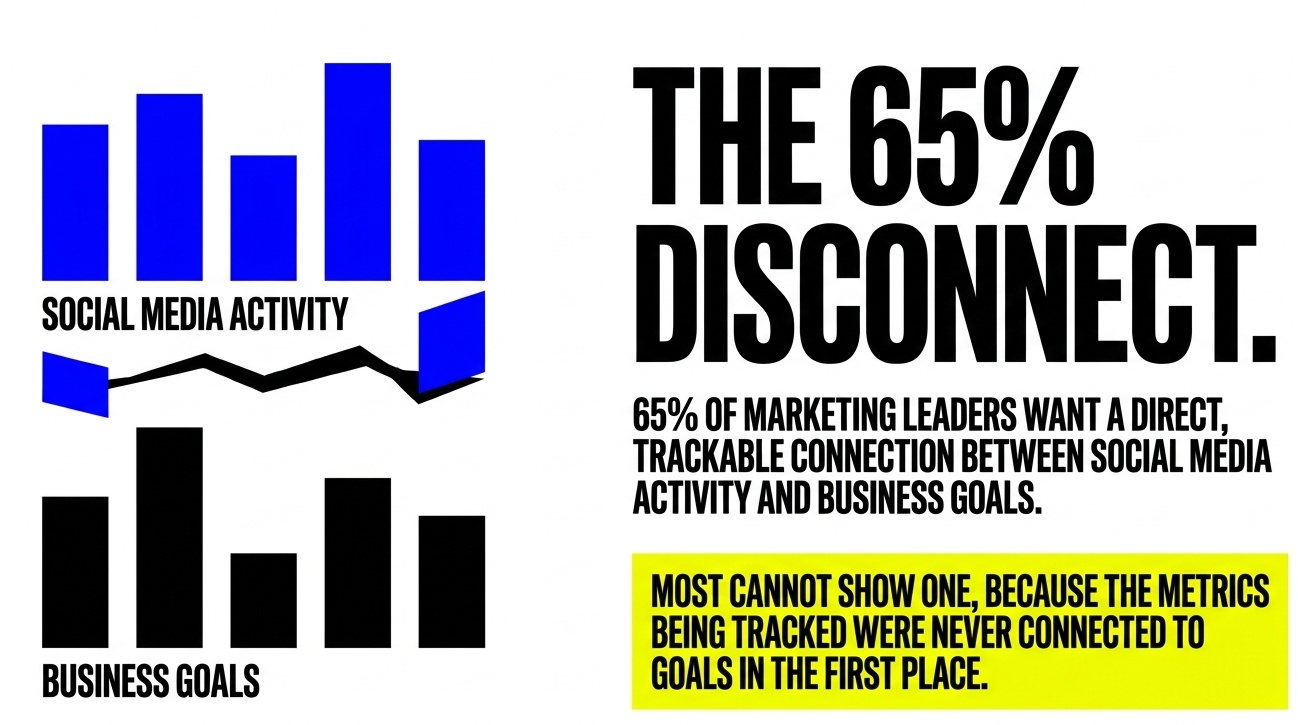
65% of marketing leaders say they want a direct, trackable connection between social media activity and business goals. Most agencies and in-house teams cannot show that connection because the metrics being tracked were never connected to goals in the first place. They were tracked because they were easy to pull from a dashboard and present as evidence of progress.
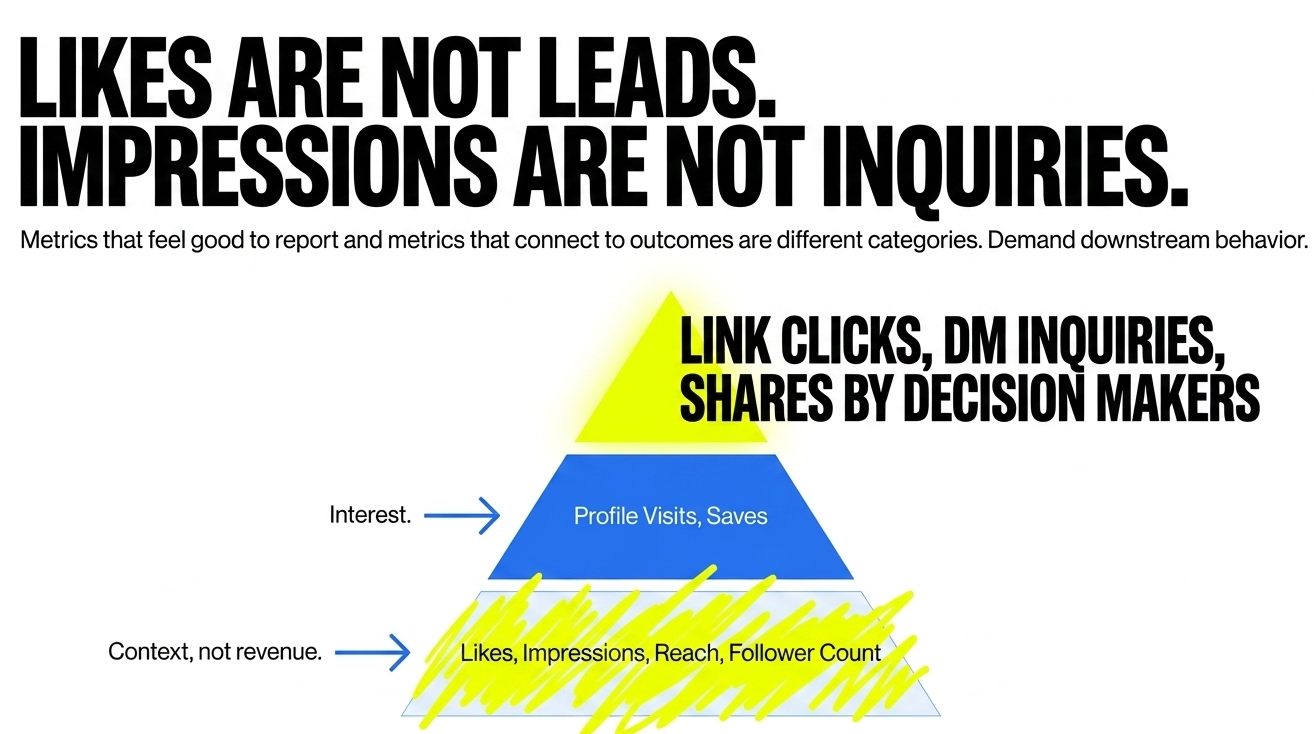
The social media engagement rates that matter are the ones tied to downstream behavior: link clicks from people who then become leads, comment threads that turn into DMs that turn into sales calls, content pieces that get shared by people who have real buying authority. Those outcomes require a strategy that considers what happens after someone sees the post, not just how many people saw it.
What Content Strategy for Service Businesses Actually Looks Like
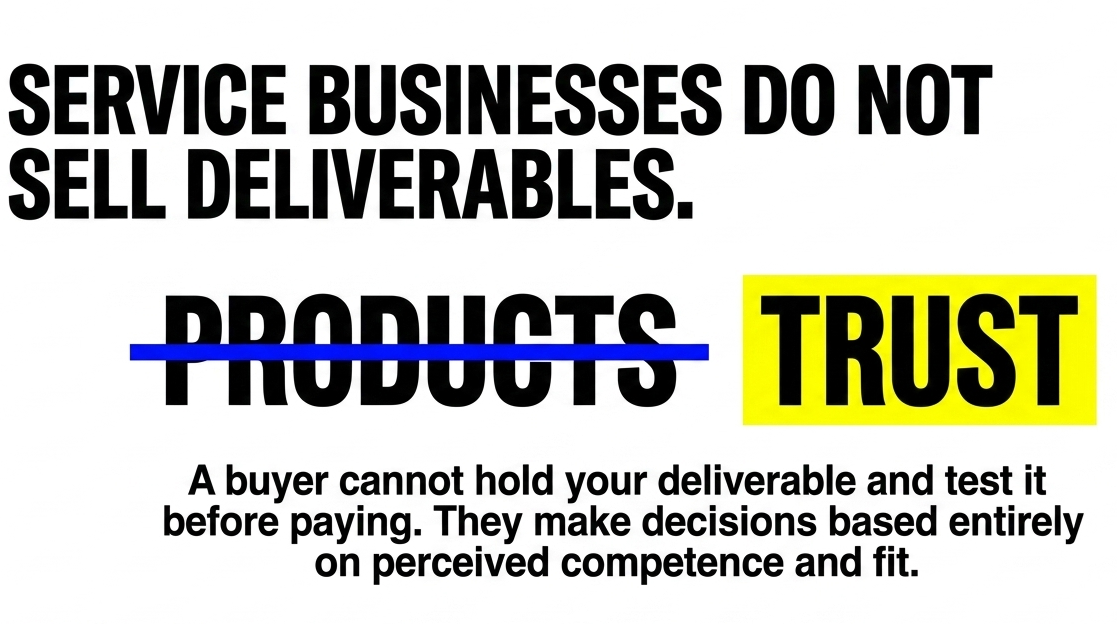
Service businesses sell trust, not products. A buyer cannot hold the deliverable and test it before paying. They are making a decision based entirely on perceived competence and fit. That means the job of social media content is not to entertain broadly. It is to demonstrate expertise to a specific audience of potential buyers and referral sources.
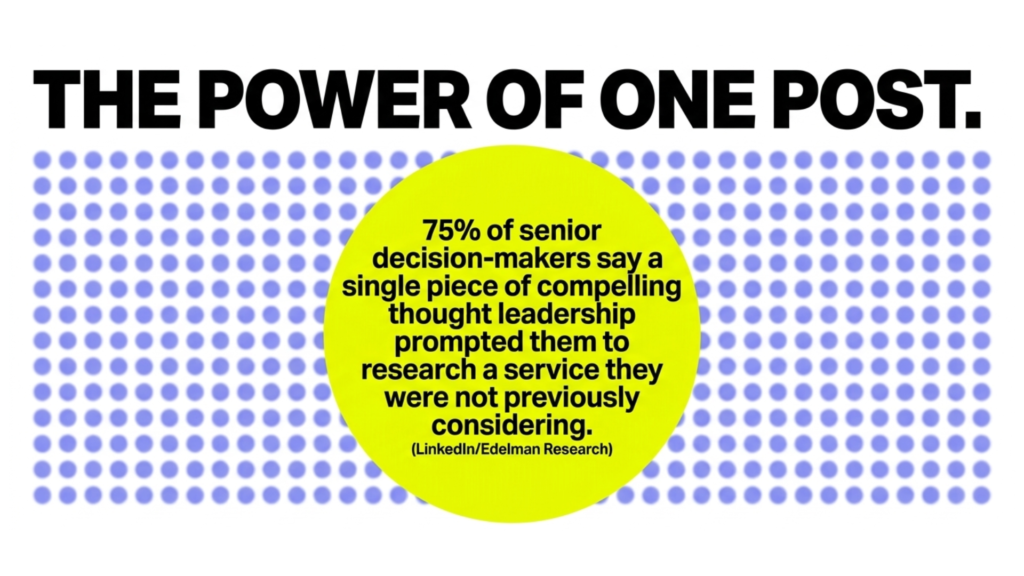
That requires a content strategy built around a point of view. Not generic tips. Not industry news reposts. Not motivational quotes with a branded frame. A point of view means the business takes a position on how things should be done, calls out what is wrong with how most people do it, and backs that up with real experience and specificity. The LinkedIn/Edelman research makes this concrete: 75% of senior decision-makers say a single piece of compelling thought leadership prompted them to research a service they were not previously considering. One post. One piece of content with a real argument in it, targeted at the right person, can do more than six months of daily noise.
The businesses that generate real pipeline from social media post less than their competitors and say more. They have a defined audience, a consistent message, and content that makes their ideal client feel understood rather than entertained.
The Paid Social Layer That Changes What Organic Content Is For
Organic social media is not dead. It is just repositioned. For most service businesses, organic content’s primary job is not reach. It is credibility. When a potential buyer sees your ad, hears your name from a referral, or finds your website, the first place many of them go is your social profile. What they find there either confirms you are worth talking to or sends them somewhere else.
That means organic social and paid social are not competing strategies. They are different parts of the same system. Paid social brings new people into awareness. Organic social is the body of evidence that earns the trust of people who have already found you. A profile full of daily filler does not pass that test. A profile with sharp, specific, well-argued content does.
Businesses that have both sides working together are the ones that see social translate into actual revenue. The organic side does not need to be high-volume. It needs to be credible. Big Click Energy approaches social media as a complete system, not a content production exercise. The question is never how much you can publish. It is what the content is supposed to do, and whether it is actually doing it.
FAQ
Why is posting every day on social media not enough? Frequency without strategy produces content that reaches a small percentage of your existing audience without a clear reason to act. Organic reach on most major platforms is already below 5%, which means volume does not automatically translate to visibility or revenue. What matters is whether each piece of content serves a specific purpose for a specific audience. Without that, posting daily is just expensive activity.
What is a social media strategy for a service business? A social media strategy for a service business is a documented plan that connects content decisions to business goals. It identifies the target audience, the core message the business wants to own, the type of content that builds trust with buyers in that category, and the metrics that actually measure progress toward revenue. It is not a content calendar, a follower target, or a posting schedule on its own.
How often should a service business post on social media? The research consistently points toward posting less and saying more. Hootsuite data suggests three to five times per week on Instagram as a general benchmark, but for most service businesses the better question is whether each post has a reason to exist. A business posting two or three times per week with genuine substance tends to outperform one posting daily with filler. Platform and audience matter, but quality wins across the board.
What social media metrics actually predict revenue? Link clicks, DM inquiries, profile visits from targeted audiences, and content shares from people with real buying authority are the behaviors that connect social activity to pipeline. Reach, impressions, and follower counts are useful for context but not for forecasting revenue. If a social media report focuses exclusively on those numbers without connecting them to any downstream action, the strategy is measuring activity, not results.
Can organic social media actually generate leads without paid ads? Yes, particularly for service businesses in professional categories. The LinkedIn and Edelman research shows that a single strong piece of thought leadership content can prompt a senior decision-maker to start investigating a vendor they were not previously considering. Organic social works best for credibility and referral amplification rather than cold reach. When organic content is doing its job, it shortens the sales cycle for leads that come in through other channels by giving them a reason to trust the business before the first conversation.