
Premium Pricing Starts with Positioning: How to Stop Competing on Price
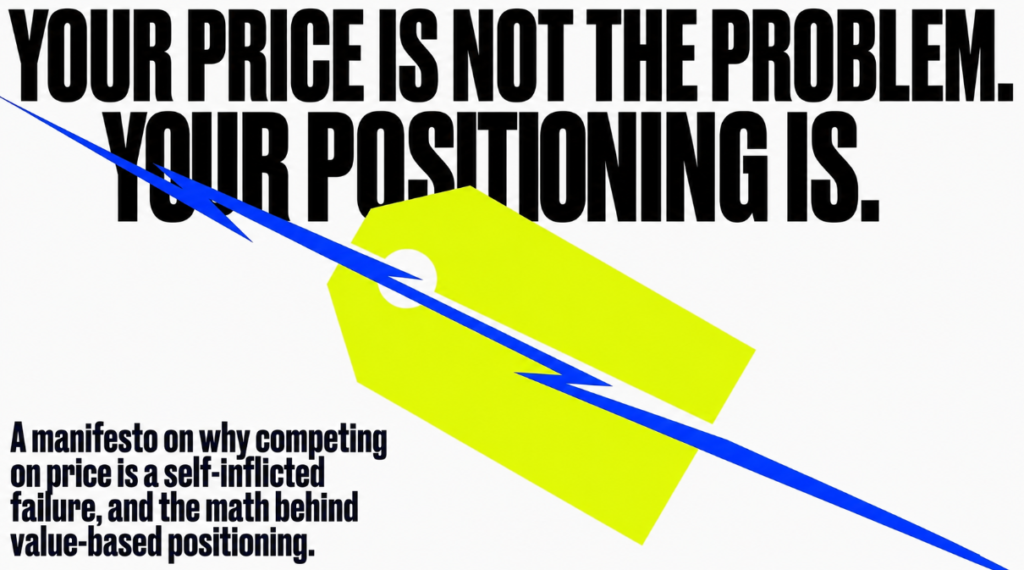
When a prospect asks for a discount before the proposal is signed, that is not a negotiation tactic. It is feedback on how the business is positioned. If your offer looks like everyone else’s offer in the same category, price becomes the only meaningful variable left to compare. Buyers are not irrational. They are doing the only rational thing available when they cannot tell the difference between you and the next option on the list.Most service businesses respond to this problem by working harder on their offer. Better deliverables, faster turnaround, more included. None of that fixes it, because the problem is not the service. The problem is how the service is framed before the buyer ever sees a proposal.
What a Marketing Audit Actually Looks Like When Someone Is Being Honest With You
Most marketing audits are not audits. They are sales decks. An agency reviewing your existing setup has a financial incentive to find problems their services solve. A vendor assessing your current performance has every reason to make the current vendor look bad and themselves look necessary. What most businesses get from a so-called audit is a formatted document that confirms what the agency already planned to propose.A genuine marketing audit is uncomfortable. It tells you things you may not want to hear about money you have already spent. It identifies the parts of your marketing that appear to be working but are not connected to revenue. It finds the parts you ignored that were quietly generating leads the whole time.
How Long Does SEO Actually Take? An Honest Timeline With No BS
Most agencies give you a vague answer on this. “SEO takes time” is not an answer. It is a dodge. The honest version requires being specific about what happens when, why some businesses see traction faster than others, and where the compounding return actually kicks in. The dishonest version involves showing a chart that goes sharply up with no dates attached and a contract that runs 12 months minimum. Every business that has ever signed an SEO contract deserves to understand exactly what they are paying for during the part where nothing is happening yet, because that period is real and it lasts longer than most agencies prefer to explain upfront.
What a High-Converting Homepage Actually Looks Like (And Why Designers Hate It)

A $15,000 website that converts at 1.5% is worth less than a $3,000 website that converts at 4%. That math is simple, and almost nobody runs it before signing a web design contract. The conversation is almost always about how the site looks. Rarely about what it is supposed to do.This happens because web design has a very old problem. Designers are trained to make things look good. The best ones are genuinely talented and they care deeply about the craft. The problem is that “looks good” and “converts visitors into leads” are separate skills, and most agencies are better at the first one. Conversion rate optimization is not a design discipline. It is a behavioral one.
Why Posting Every Day Is Not a Social Media Strategy (And What Actually Drives Revenue)
Frequency without strategy produces content that reaches a small percentage of your existing audience without a clear reason to act. Organic reach on most major platforms is already below 5%, which means volume does not automatically translate to visibility or revenue. What matters is whether each piece of content serves a specific purpose for a specific audience. Without that, posting daily is just expensive activity.
Conversion-Focused Web Design: Why Your Homepage Is Failing in the First 10 Seconds
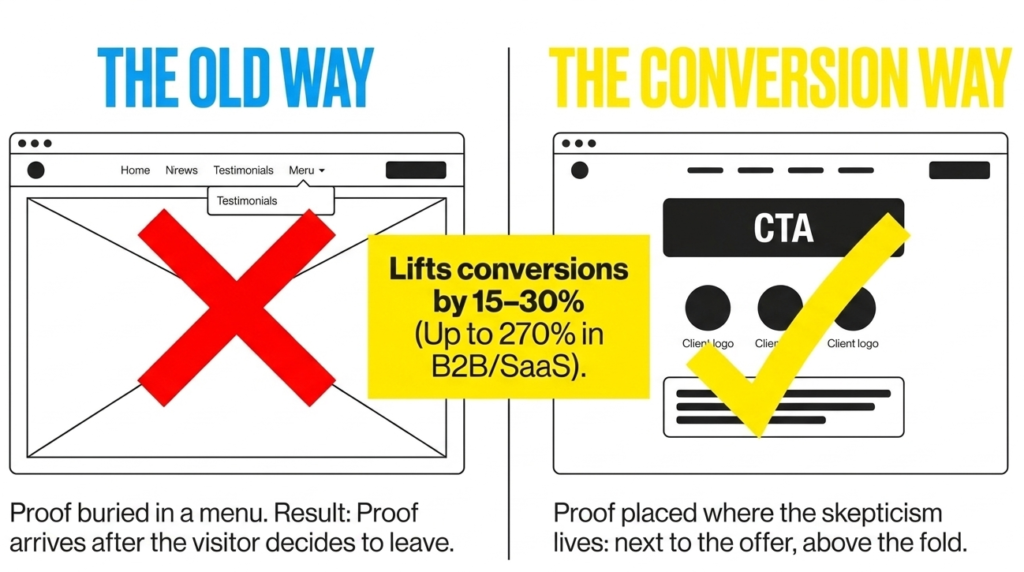
Fifty milliseconds. That is how long a visitor takes to decide whether a website is worth their attention. For context, a human blink takes three hundred. Which means the homepage is judged, dismissed, and mentally filed roughly six times before the eyelid completes a single close.
Facebook Ads vs Google Ads: The Honest Breakdown for Business Owners Who Are Done Guessing
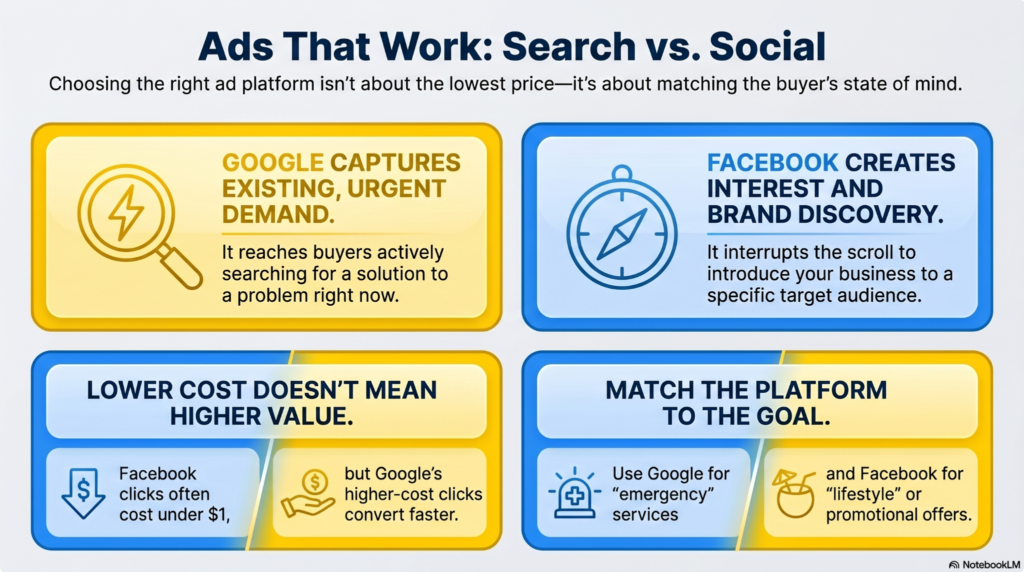
Every year, businesses collectively spend billions of dollars on paid advertising based on a recommendation from someone whose primary qualification is that they already have access to the ad account. The channel gets chosen. The budget gets allocated.