
TLDR:
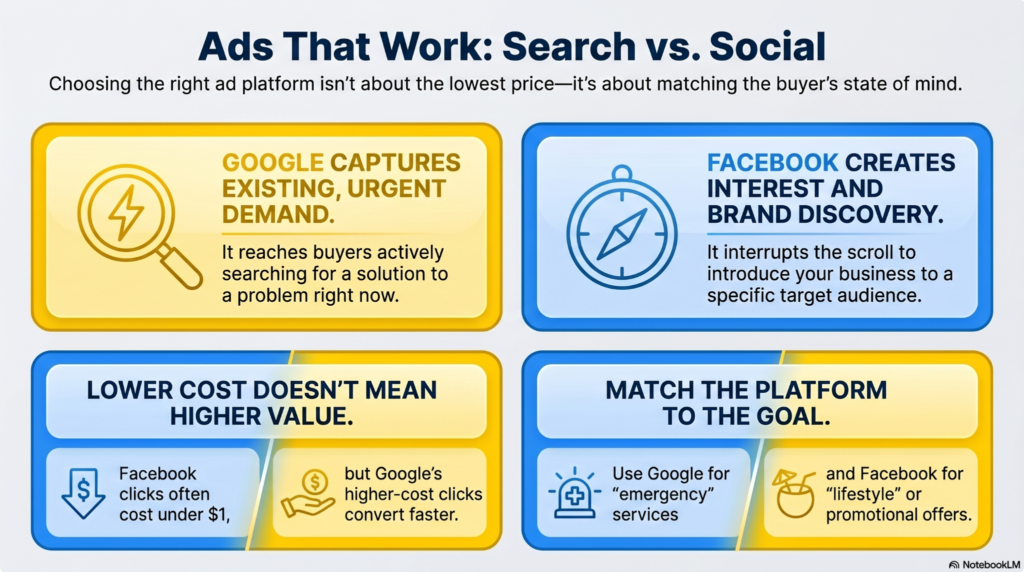
- Google captures demand that already exists. Facebook creates demand that does not yet.
- Average Google cost per lead sits at roughly 70 dollars across industries, with local service niches running higher.
- Facebook CPCs run well under 1 dollar in most local categories, but lower cost per click does not mean lower cost per customer.
- The right channel depends on what the buyer is doing when your ad reaches them, and most businesses have never been asked that question.
Every year, businesses collectively spend billions of dollars on paid advertising based on a recommendation from someone whose primary qualification is that they already have access to the ad account. The channel gets chosen. The budget gets allocated. The campaign goes live. At no point in this sequence does anyone ask what the buyer was doing when they decided to purchase.
This is the part of the Facebook ads vs Google ads conversation that most agencies would prefer to have after the contract is signed.
The Intent Gap That Makes Facebook Ads vs Google Ads a Different Conversation Entirely
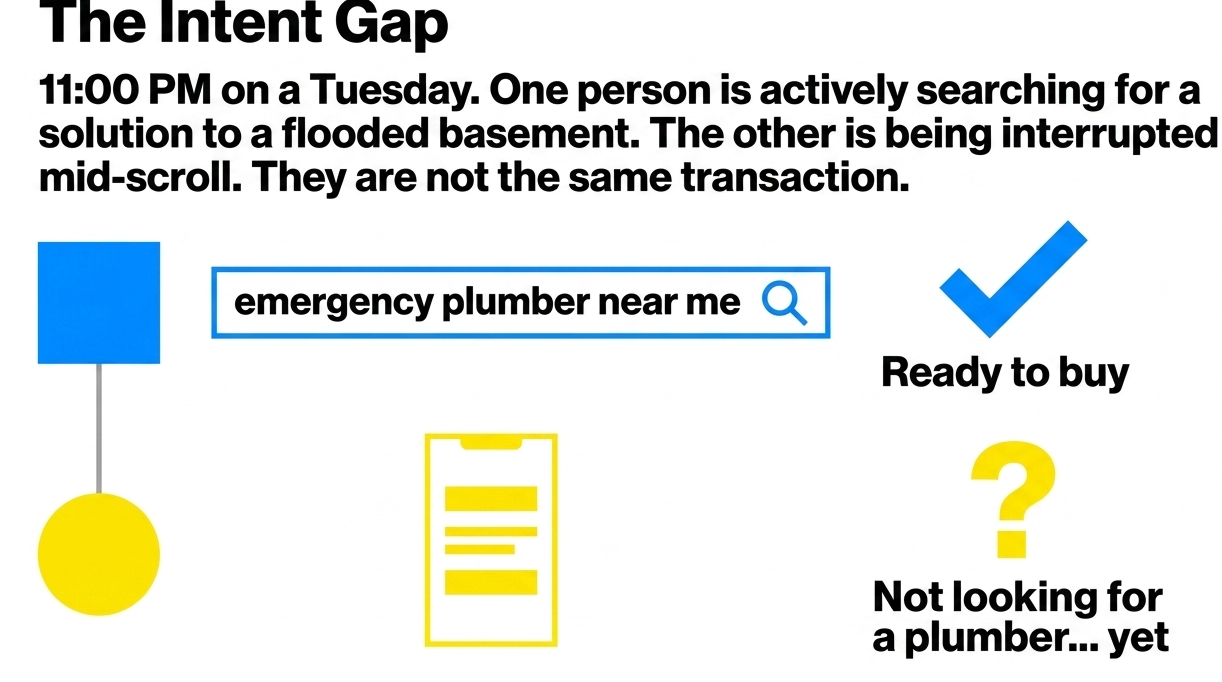
Someone searching “emergency plumber near me” at 11pm on a Tuesday has already made a decision. They need a plumber. They are ready to call whoever appears first and looks credible enough to trust with their flooded basement.
Someone scrolling Facebook at 11pm on a Tuesday is doing something else entirely. They are not looking for a plumber. They might become interested in one if the timing and the offer are right. That is a meaningfully different transaction.
This is the intent gap. It does not make one channel better than the other. It makes them different tools for different jobs, which a surprising number of agencies present as optional information.
What the Cost Per Lead Actually Tells You About Paid Advertising Strategy
The cost per lead number is useful, but it is not the whole story, and treating it as such is where most paid advertising strategy conversations go sideways.
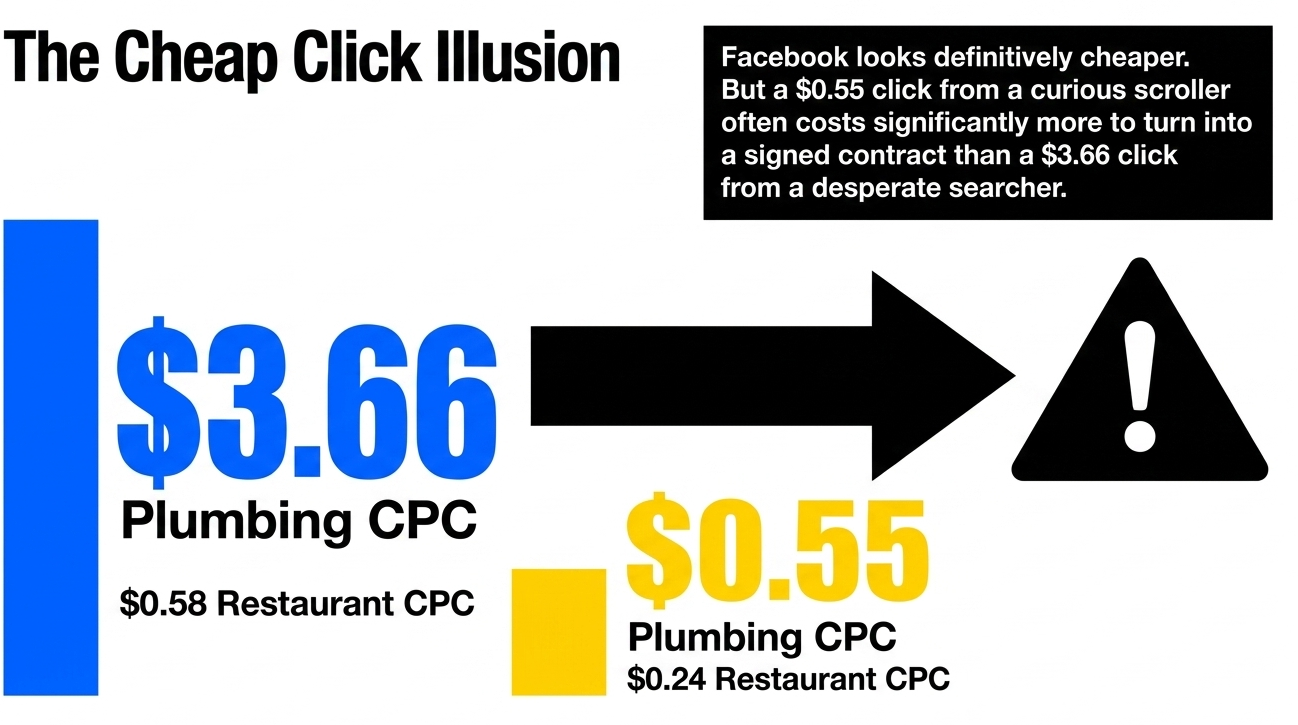
On Google, a plumbing business pays around 3.66 dollars per click. On Facebook, the same business pays roughly 0.55 dollars. Restaurants see something similar: 0.58 dollars on Google versus 0.24 dollars on Facebook. At first glance, Facebook appears to settle the question. It does not.
The Google click came from someone who typed “plumber near me” into a search bar. The Facebook click came from someone who was interrupted mid-scroll and briefly curious. When you follow both clicks through to signed contracts or booked appointments, the cheaper channel frequently becomes the more expensive one. Interestingly, this tends to surface more prominently in the conversation after a campaign underperforms than before it launches.
Google Ads for Local Businesses: When the Higher CPC Is the Smarter Bet
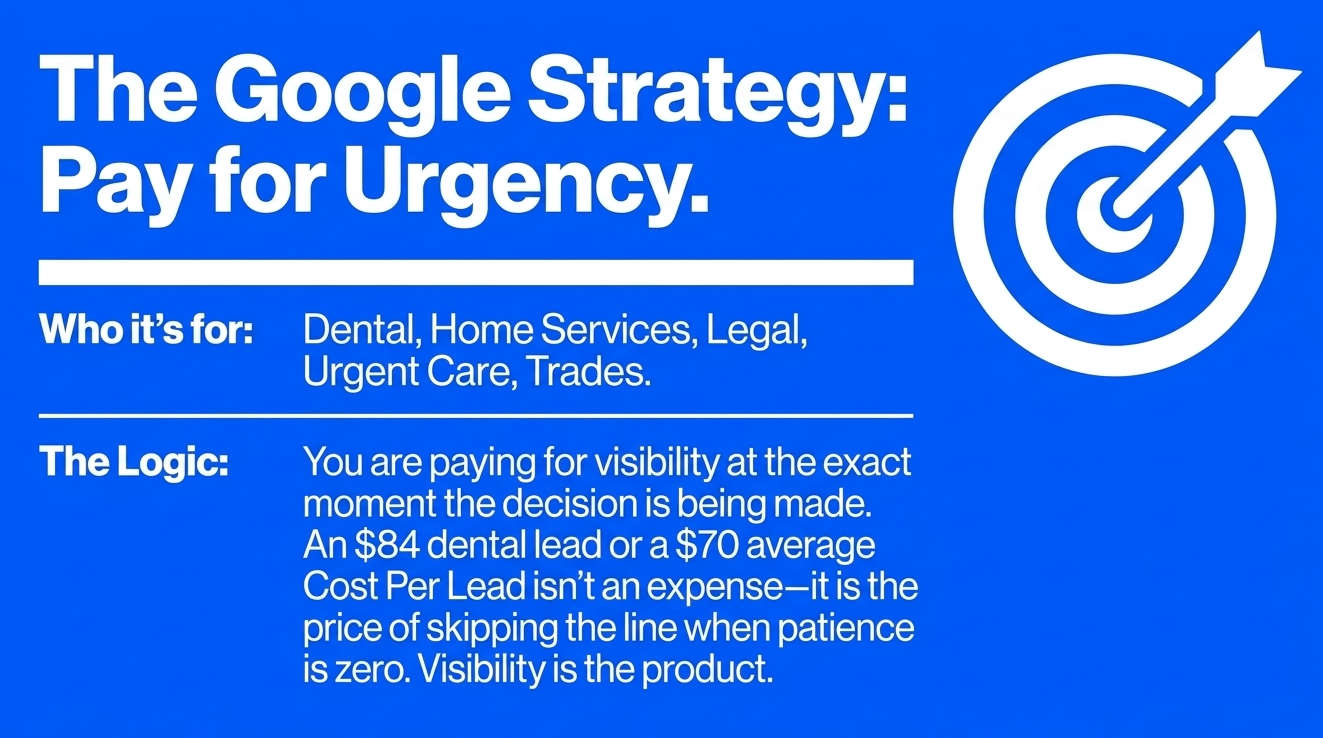
Google Ads for local businesses earns its cost structure in categories where the buyer is already in motion: dental practices, home services, legal, urgent care, trades. These are businesses where the customer has a problem, knows they have a problem, and is actively searching for someone to solve it.
A dental practice paying 84 dollars per lead on Google is paying to be in front of someone who just searched “dentist accepting new patients near me.” That person has intent and is comparing options right now. The 84 dollar figure looks different when the alternative is not reaching that person at the moment the decision is being made.
The categories where Google CPLs run highest are also categories where buyers move quickly and have limited patience for discovery. Visibility at that moment is the product. The CPC is the price of it.
Facebook Ads for Small Business: What Cheaper Clicks Are Actually Buying
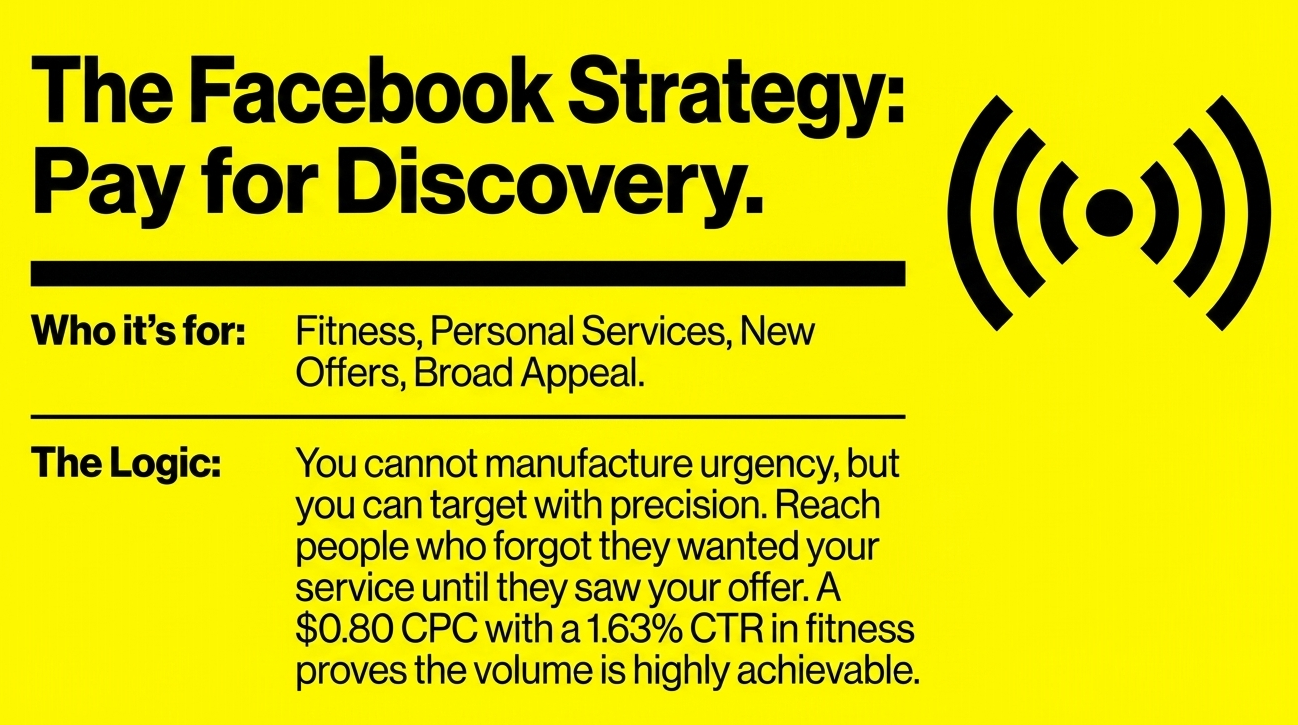
Facebook ads for small business operate on a different logic. The platform knows an enormous amount about its users and can place an ad in front of a highly specific audience with considerable precision. What it cannot manufacture is urgency.
This is not a flaw. It is a feature, used correctly. A gym running a January promotion does not need to find people already searching for gyms. It needs to find people who have thought about getting fit, forgotten about it, and might act with the right offer in front of them at the right moment. Health and fitness brands pay around 0.80 dollars per click with click-through rates near 1.63 percent. Personal services see similar numbers. The volume is achievable and the targeting is genuinely useful.
The failure mode is measuring Facebook traffic against the same conversion expectations as search. A Facebook visitor and a Google visitor arrived from different states of mind. A landing page that does not account for that tends to underperform on both.
The Paid Advertising Strategy Question Nobody Is Asking
Most agencies lead with the channel they are best at running. This is not a conspiracy. It is a natural organizational tendency. A team built around search will find reasons why search is the right fit. A team built around social will find reasons why Facebook is underutilized. Both arguments will contain accurate information. Neither begins with what the client’s buyer is actually doing when they make purchasing decisions.
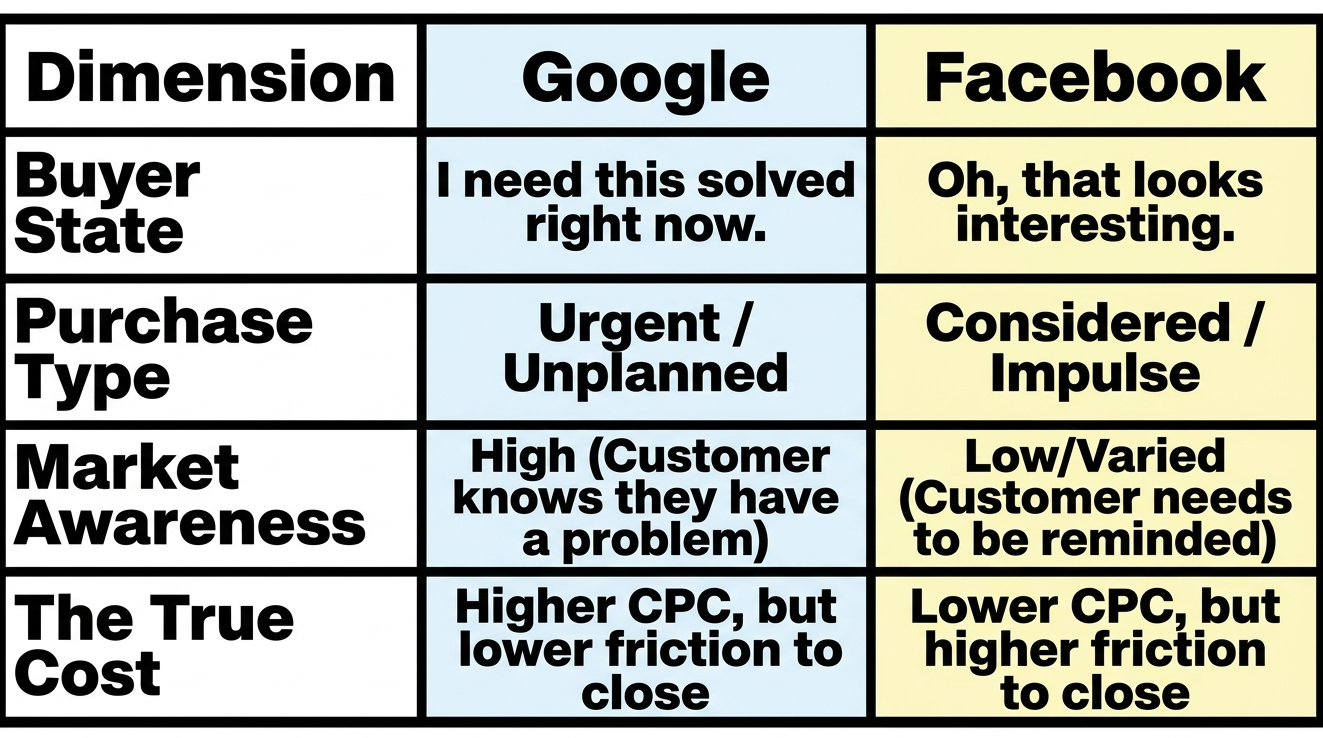
The more useful starting question is behavioral. Is the customer searching for this category when they need it, or do they need to be reminded it exists? Is the purchase decision urgent or considered? Is the market aware of the problem or not yet?
Facebook ads vs Google ads is a sequencing and allocation question, and the answer changes by industry, by offer, and sometimes by the time of year. Big Click Energy approaches channel selection with the client’s buyer in mind first and the agency’s capabilities second. For businesses that have received the same channel recommendation from three different partners, that sequence tends to feel like a noticeable change.
FAQ
What is the main difference between Facebook ads and Google ads? Google captures existing demand. Someone searches for what they need and the ad appears in response. Facebook creates demand by placing an offer in front of a targeted audience that was not actively searching. Both approaches work, but they work at different points in the buying process, and confusing the two is a reliable way to misread campaign performance.
Which is cheaper, Facebook ads or Google ads? Facebook typically wins on cost per click. Benchmarks across local service industries show Facebook CPCs running well under 1 dollar, while Google CPCs for the same categories can range from under 1 dollar for restaurants to over 4 dollars for legal services. However, cost per lead and cost per actual customer often tell a different story, because Google clicks tend to come from buyers closer to a decision.
Are Google ads worth it for small local businesses? For categories where customers search actively when they need help, trades, dental, urgent care, legal, fitness, the answer is generally yes. The intent behind a search click is difficult to replicate through other means. The cost is higher per click, but the buyer is further along in the decision process, which affects how many clicks it takes to produce a customer.
When do Facebook ads make more sense than Google? When the goal is to reach a specific audience before they are actively searching, introduce a new offer or service, or drive volume at a lower cost per click in categories with broad appeal. Facebook is also effective for retargeting visitors who have already shown interest, which can work in combination with a Google search campaign rather than instead of one.
Do I need to run both channels at the same time? Not necessarily, and not always immediately. The right paid advertising strategy depends on budget, category, and what stage of growth the business is in. Some businesses are better served by doing one channel well before layering in a second. Others benefit from running both in parallel targeting different stages of the buyer journey. The answer is specific to the business, which is why a single default recommendation from an agency is usually worth questioning.