
TLDR:
- 41% of overall digital ad spend goes to waste across industries. For small and mid-size businesses, that number climbs to 60% according to research from Epitomise. The problem is almost never the platform.
- Nearly 47% of marketing spend is wasted specifically due to poor tracking and attribution. Businesses are optimizing campaigns based on data that does not accurately reflect what is happening.
- 8.51% of all paid ad traffic is invalid, meaning roughly one in every 12 clicks does not come from a real user with genuine purchase intent. In 2025 alone, $63 billion in ad spend went to invalid traffic globally.
- Landing page misalignment accounts for 18% of campaign performance decline. The ad can work. The page it sends people to is where revenue disappears.
The budget gets spent. The dashboard shows activity. Impressions are up. Clicks are coming through. And revenue has not moved. This is the most common complaint in paid advertising, and the diagnosis almost never points where the business owner assumes it does.
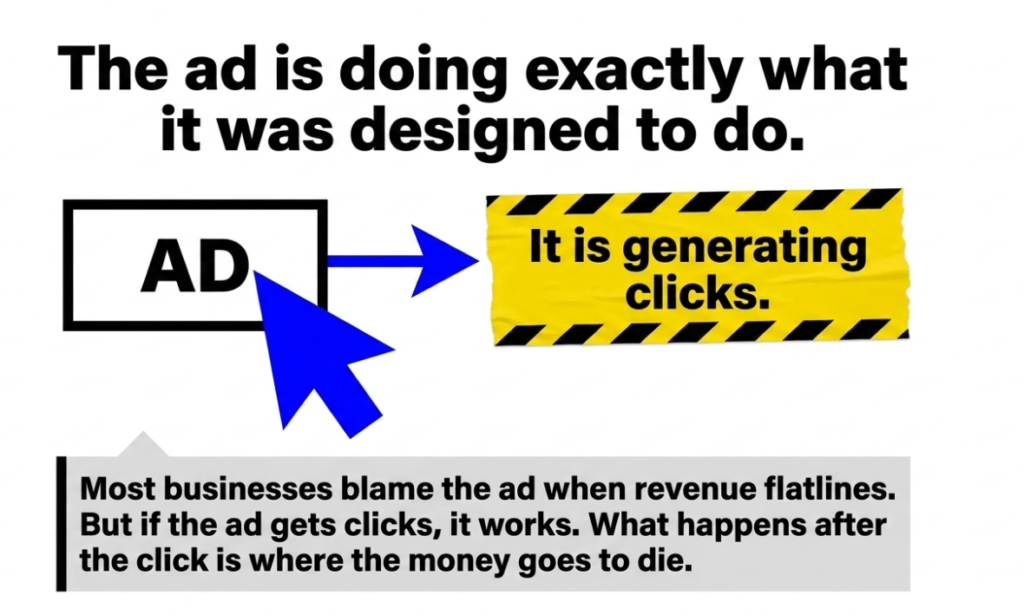
Most businesses conclude the ad is bad. Sometimes it is. More often, the ad is doing exactly what it was designed to do: it is generating clicks. What happens after those clicks is where the money goes to die, and that part of the system is almost never examined with the same rigor as the creative or the targeting.
The honest version of this conversation starts with a question almost no agency volunteers: what does the click actually land on, what does it cost per acquisition when you trace the full path to revenue, and are the numbers being reported actually accurate?
Why the Targeting Is Probably Not as Precise as the Dashboard Suggests
Audience targeting is the most frequently cited cause of wasted ad spend, flagged as the primary failure point by 25% of advertisers who audit their campaigns. But the targeting problem is more specific than “wrong audience.” It is usually the wrong audience for where they are in the decision process.
Broad match keywords on Google trigger ads for searches that have no commercial intent. A business targeting “marketing agency” will appear for searches like “marketing agency jobs,” “what does a marketing agency do,” and “marketing agency business plan.” Those clicks cost the same per click as “hire a marketing agency near me.” They produce a fraction of the conversions. And if negative keyword lists are not actively maintained, the budget keeps draining into irrelevant searches every day the campaign runs.
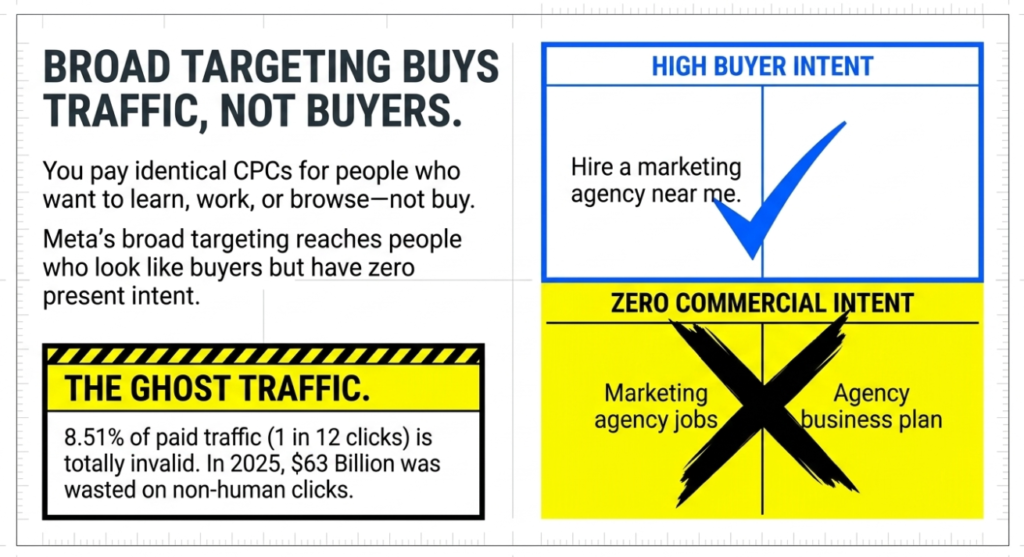
On social platforms the problem is different but equally expensive. Broad targeting on Meta with no lookalike constraints or behavioral filters reaches people who demographically resemble buyers but have no present intent to purchase. The CPCs look encouraging. The cost per actual customer is three times what it would be with tighter audience definitions. The agency reports a healthy click-through rate. The business gets no calls.
The Tracking Problem Nobody Wants to Discuss Before the Contract Is Signed
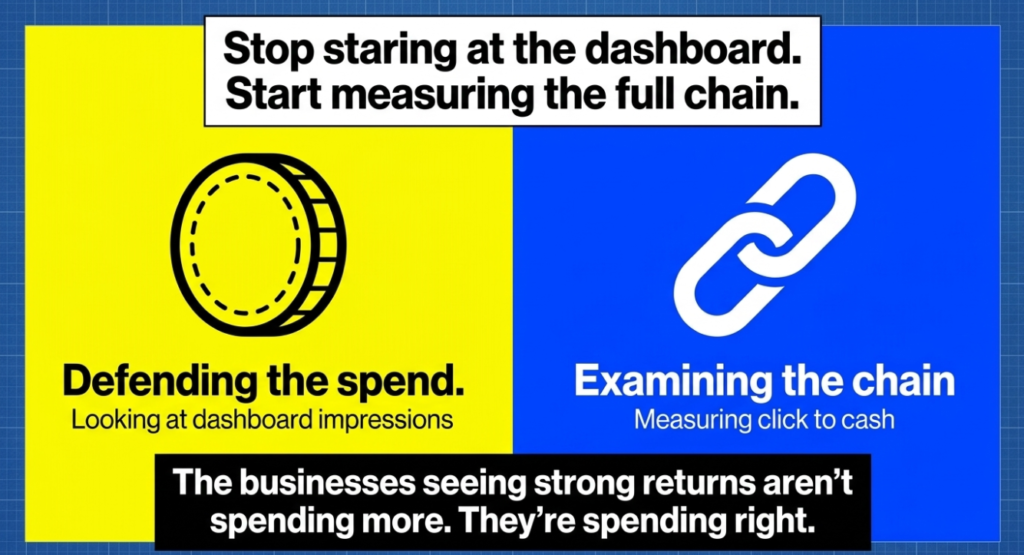
Nearly 47% of marketing spend is wasted due to poor tracking and attribution. That number is worth reading again. Half of the budget problem in most paid campaigns is not execution quality. It is that the data being used to make decisions is wrong.
Pixel fires that double-count conversions make campaigns appear more profitable than they are, causing businesses to scale budgets into channels that are inflating their results. iOS privacy changes have degraded Meta’s conversion tracking to the point where platforms report only 65% to 75% of actual purchases in many categories. The algorithm, believing it has found the perfect audience, optimizes toward a partial and increasingly inaccurate dataset. Six months later, cost per acquisition has doubled and no one can explain why.
Last-click attribution compounds the problem. When a buyer sees a Facebook ad, searches for the business on Google, and converts through a branded search, Google Ads takes full credit. Facebook gets no credit and gets cut from the budget. The branded search campaign looks like a revenue driver. Facebook was actually responsible for the initial interest. The business eliminates the channel doing the awareness work and then wonders why new customer volume drops.
Fixing the tracking is unglamorous. It requires going into the ad accounts, verifying conversion event setup, cross-referencing reported conversions against CRM data, and rebuilding attribution models that reflect actual buyer behavior. Most agencies do not do this unless asked. It is easier to report the dashboard numbers and let the client draw their own conclusions.
What the Landing Page Is Actually Doing to Paid Ad Performance
Landing page misalignment accounts for 18% of documented campaign performance decline. The ad can be compelling, the targeting can be precise, and the budget can be adequate. If the page the visitor lands on does not match the expectation the ad created, the conversion will not happen. The click was paid for and nothing was received in return.
The most common version of this problem is sending paid traffic to a homepage. Homepages are built for multiple audiences with multiple possible next steps. A paid visitor arrived because a specific ad made a specific promise. When they land on a general homepage that does not reflect that promise, they have to do work to figure out if this business can actually solve their problem. Most do not bother. The bounce rate on paid campaigns sent to homepages is consistently higher than on campaigns sent to dedicated, message-matched landing pages.
The second version is a landing page that exists but was never designed to convert. A form with eleven fields. A headline that describes the company rather than the buyer’s outcome. No social proof above the fold. A CTA that says “Submit.” These pages were built to technically exist as a destination, not to move buyers forward. They absorb the ad spend and return nothing, and they look identical to a broken campaign in most reporting dashboards unless someone specifically measures the landing page conversion rate against paid traffic.
How Ad Creative Fatigue Drains Budget Quietly
Creative fatigue accounts for 21% of campaign performance decline. The ad that worked in month one does not work the same way in month four, because the same people have seen it six, eight, twelve times. Engagement drops. Cost per result climbs. The bidding algorithm responds to declining performance signals by increasing what it bids to maintain reach. Budget goes up. Results go down.
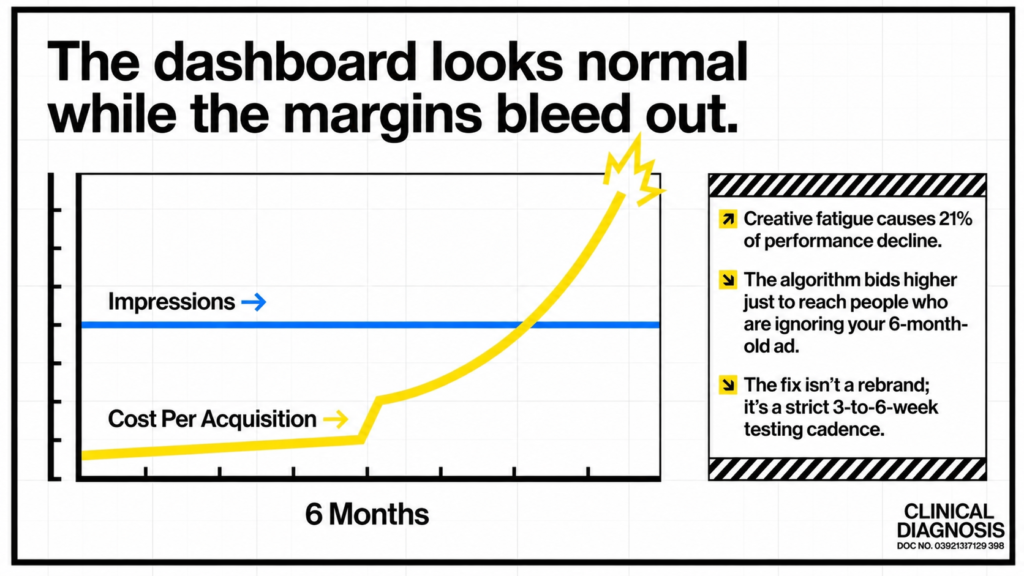
Most businesses do not notice this happening because the degradation is gradual and the dashboard still shows activity. Impressions remain consistent. Clicks are coming through at a familiar volume. The problem surfaces in the cost per lead or cost per customer, which has been climbing by a few percentage points each month until it no longer makes business sense. Then the business concludes the platform is not working and either increases the budget or switches channels, neither of which addresses the actual problem.
The fix requires a creative refresh cadence. New ad variations tested against existing controls every three to six weeks for high-frequency campaigns. Variation in format, in hook, in visual treatment. Not a rebrand. An ongoing testing practice that prevents any single creative from becoming invisible through overexposure. Businesses that treat creative as a one-time production exercise and agencies that bill for setup without building in ongoing creative development both produce this outcome at scale.
What an Honest Paid Advertising Strategy Review Actually Finds
When a paid advertising account that is losing money gets audited by someone not invested in the original setup, the findings follow a predictable pattern. Negative keyword lists that have never been updated, meaning years of irrelevant clicks have been paid for. Conversion tracking that is double-firing or that has never been verified against actual sales data. A landing page that was built in an afternoon and has never been tested or iterated on. Creative that has been running unchanged for six months. And a budget that keeps getting increased because the assumption is that more spend solves the problem.
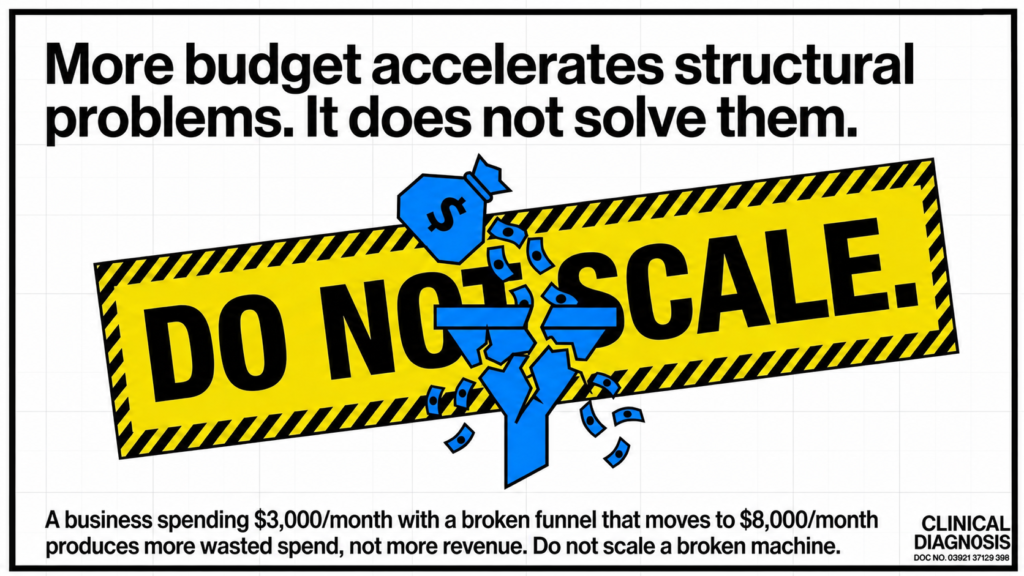
More spend does not solve a structural problem. It accelerates it. A business spending $3,000 a month with a broken funnel that moves to $8,000 a month produces more wasted spend, not more revenue. The structural fix requires examining every link in the chain: the keyword match types and negative lists, the tracking setup and attribution model, the landing page conversion rate against paid traffic specifically, and the creative refresh frequency. Most of those fixes cost time, not budget. They require someone to look honestly at the account rather than defend it.
Big Click Energy audits paid accounts the same way: tracking first, attribution second, landing experience third, creative fourth. The budget conversation comes last, because adding money to a broken system is the most expensive thing a business can do. For businesses that have been watching ad spend leave without understanding where it went, that sequence tends to surface the answer faster than any dashboard report ever has.
FAQ
Why is my ad spend not generating leads or revenue? The most common causes are audience targeting that reaches people outside the buying decision window, landing pages that do not match the promise the ad made, tracking errors that distort the data being used to optimize the campaign, and creative fatigue from ads that have run without variation long enough to become invisible. Most businesses assume the ad itself is the problem. Usually the issue is downstream: what happens after the click, and whether the data being used to manage the campaign accurately reflects reality.
What percentage of ad spend gets wasted? Research consistently puts overall digital ad spend waste between 41% and 60% depending on business size and category. Nearly 47% of marketing spend is wasted specifically due to poor tracking and attribution systems. In 2025, $63 billion in global ad spend was wasted on invalid traffic alone, representing 8.51% of all paid ad clicks. These are not anomalies. They are the industry average, which means most businesses are experiencing significant waste without knowing where it is going.
What is ad attribution and why does it matter for my budget? Attribution is the practice of assigning credit to the right marketing touchpoints in the buyer’s journey. When attribution is wrong, budget decisions are wrong. Last-click attribution, which is the default setting in most ad accounts, gives full conversion credit to the final touchpoint before purchase and ignores everything that contributed earlier. This causes businesses to cut channels that are actually doing important awareness or consideration work. Fixing attribution often reveals that the channels being scaled are not the ones driving revenue, and that the channels being cut were responsible for starting the customer journey.
How do I know if my landing page is killing my ad performance? Check the conversion rate on your paid traffic specifically, not your site-wide average. A homepage converting at 3% overall may be converting paid traffic at 0.8% because the message on the page does not match the promise in the ad. If you are sending paid traffic to a homepage rather than a dedicated, message-matched landing page, that is the first thing to fix. If the dedicated page exists but has never been tested, check how many form fields it has, whether proof is visible above the fold, whether the headline reflects the ad that drove the click, and whether the CTA describes a specific next step.
Should I increase my ad budget if campaigns are underperforming? No. Increasing budget on a structurally broken campaign produces more waste at a higher rate. The sequence should be to audit the tracking and attribution first, fix the landing experience second, refresh the creative third, and tighten the audience targeting fourth. Only after those structural issues are addressed should budget be scaled. The businesses that see strong returns from paid advertising are not necessarily spending more. They are spending on campaigns where the full chain, from click to landing page to lead to sale, has been tested and verified to produce a return at current spend levels.